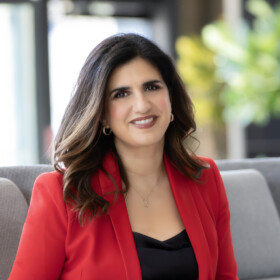
About This Speaker
Tina Varughese is a globally recognized diversity and inclusion speaker and author who inspires audiences with humour, humility, and humanity. She helps organizations build cultures of collaboration, curiosity, and compassion. As a result, employees feel empowered to share ideas, ask questions, take risks, and communicate openly.
Tina authored the bestseller 50 Shades of Beige: Building Bridges While Breaking Bias. Her work has appeared in the Globe and Mail, Toronto Star, CBC Eyeopener, and HR Reporter. In addition, Ignite Magazine named her a Top Ten Notable Speaker. Her clients include Pfizer, Carnival Cruises, Hockey Canada, Kraft-Heinz, 3M, and the Million Dollar Roundtable.
She has served on McMaster University’s Future of Canada Council. She also held the role of Past-President of the Canadian Association of Professional Speakers (Alberta).
Tina draws on her experience managing Alberta’s immigration office and running her own relocation and settlement firm. Her keynotes are interactive, energetic, and entertaining. Moreover, they give attendees practical tools to think, behave, and communicate with greater intention.
A mother of two, partner to one, and friend to many, Tina Varughese encourages all to strive for a better tomorrow, today.
Speaker Fee: $10,000 - $15,000
Contact an agent to get Tina's availability and rates
We’ve all felt that sinking feeling of not quite belonging. Altering ourselves to fit a certain mold for acceptance rather than being able to embrace our authenticity. When everyone is seen, heard, acknowledged authentically, intentionally, and consciously, workplaces promote a sense of belonging rather than a longing to belong. Is it easy? No. Can it be done? Yes it's a continuous journey- not a destination. Ultimately, to belong means to be seen. If we cannot change the way we look, we need to change the way we see.
Key Takeaways:
- Longing to Belong: Small Actions, Large Impact
- The Art of Authenticity: Four Strategies to Embracing Your Authentic Self
- Leading with Empathy- Encouraging Courageous
- Conversations at the workplace
- Inclusive meetings: Strategies for healthy dialogue, discussion and debate
- Gen Zen: Leadership Agility when working with a multigenerational workforce
- The impact of purposeful and intentional vulnerability at the workplace
Successful leaders understand today's increasingly multigenerational, multicultural and multifaceted workforce brings both opportunities and challenges if not managed effectively. To create trust, collaboration and creative work environments, inclusive leaders need to effectively communicate, understand and listen to their fellow employees. Everybody wants to be seen, wants to be heard and wants to be acknowledged. Learning how to communicate and cooperate in the workplace leads to a healthier, happier, motivating and inspiring workplace where everybody benefits.
Key Takeaways:
- Are you generationally ‘savvy’?
- Does your leadership style reflect “gen zen”?
- Play nice in the sandbox – team building through collaboration and understanding
- Empowering introverts in the workplace
- Individualistic and collectivist cultures: how values change the way we communicate
- What time is it? The difference between monochronic and polychronic cultures and why it matters to the workplace
Often employees need to adapt to uncertainty and change. Regardless of title or position, we are all leaders — at work and at home — and have the power to inspire and influence through intentional actions. Leadership is rooted in effective communication, empathy, and collaboration. As employees face increasing disengagement and mental health challenges like depression, anxiety, burnout and long-term absences from work, it's essential to lead with compassion, transparency, integrity, and resilience. This interactive, hands-on keynote will galvanize employees to shift their mindset towards positive action and change fostering inclusivity, unity, and engagement.
Key Takeaways:
- Standing Together Apart: How to create respectful, communicative, inclusive, collaborative teams
- How to have empathetic and courageous conversations
- When Fear Takes Over: Strategies to Cultivate Confidence and Promote Positive Mental Health
- The Power of Surrendering to Circumstance: Why Letting Go Strengthens Resilience
First impressions, positive or negative, are made in seven seconds or less. We all make quick assessments of others without even realizing it. We are not born with bias. Biases are formed by past situations, experiences, background and culture. Unconscious biases typically exist towards gender, race, religion, sexual orientation, age, disability (both physical and mental), and weight. Most of us will say "I see people for who they are" but do we? Unconscious biases affect and impact decision making both professionally and personally with real impact. Recognizing, managing and mitigating unconscious bias promotes diversity and inclusion. Diversity and inclusion drives innovation, increases productivity, and stimulates creativity while promoting a healthy, happy, engaging workplace culture.
Key Takeaways:
- The Neuroscience behind Unconscious Bias
- Managing and Mitigating Unconscious Bias in Recruitment, Retention and Employee Engagement
- Breaking Bias – Strategies for Gender, Maternal, Affinity and Ageism
- Sesame Street 2.0 – One of these things is not like the other, one of these things just doesn’t belong...or does it?
- How Diversity Drives Innovation, Creativity and Productivity
- Why Creating a Culture of Inclusion affects Positivity, Profits and Purpose
Creating a great organization isn't just about breaking down cultural barriers. It's about building a workplace where everyone works towards a common purpose and feels included despite title, rank or position. Successful leaders understand people do not leave jobs. People leave people. Today's successful leaders believe not only in investing in themselves, but encouraging others to grow, to learn and to develop in order to build inclusivity and trust, break down silos, foster employee engagement, encourage open lines of communication, promote creativity and create a healthy, happy and inspiring workplace.
Key Takeaways:
- Breaking down silos: How to create respectful, communicative, inclusive and collaborative teams
- Delivering constructive, influential, inclusive and solution-based feedback
- Death by meeting: Five key steps to inclusive and effective meetings
- Inclusive personal and organizational purpose: How recognizing others’ contributions gives you a stronger sense of purpose
- Negative Nellie and Nasty Ned: How to actively listen, include and empathize to change negative behaviors at work
- The importance of stress management for leaders
Successful organizations understand that being able to communicate cross-culturally in the workplace leads to enhanced productivity, performance and employee engagement. Managing diversity drives profitability, leads to innovation and promotes an inspiring workplace culture.
Key Takeaways:
- Cultural differences in communication: Indirect vs. direct speaking styles
- Individualistic and collective cultures: How values change the way we communicate
- Effective day-to-day communication when English is a second language
- Non-verbal communication: Why the “unspoken” word is the most important of all
- How global companies lose millions in revenue due to a lack of understanding of cultural differences
- How to use the VAK model of Communication (visual/audio/kinaesthetic communication styles) using the cross-cultural advantage