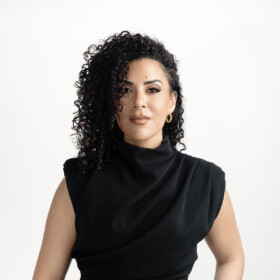
About This Speaker
Before stepping onto corporate stages, Pamela spent years working deep undercover in drug enforcement. There, trust wasn’t a soft skill; it was survival. Embedded for months at a time, she learned to signal credibility, detect deception, and earn influence long before anyone spoke a word. In those environments, misreading people had immediate consequences.
After law school, Pamela transitioned into the courtroom as a federal prosecuting attorney. There, the same dynamics played out under a different kind of scrutiny. Credibility, perception, and communication directly shaped outcomes: verdicts, negotiations, and high-pressure decisions.
Today, Pamela translates those field-tested lessons into practical strategies leaders can use. She teaches them to communicate with clarity, project credibility, and build trust that drives results. Her work blends real-world experience, behavioral science, and negotiation research to show how everyday interactions build, or break, trust.
Known for her sharp insight, compelling storytelling, and immediately actionable takeaways, Pamela delivers more than inspiration. Audiences leave with tools they can apply the same day. These tools help them improve leadership presence, influence outcomes, and build lasting trust.
Pamela is a former undercover police officer and federal prosecutor. She is also a trust strategist, nonverbal communication expert, and co-host of the television series Building Bad. She has delivered two widely viewed TEDx Talks, and remains a sought-after keynote speaker for organizations across North America and beyond.
Speaker Fee: $10,000 - $15,000
Contact an agent to get Pamela's availability and rates
Most leaders focus on what they want to say. The most effective leaders focus on what others are picking up. Crack the Code reveals how trust, credibility, and influence are formed through subtle communication signals, and how leaders can intentionally shape those signals to improve outcomes.
In every interaction, people constantly assess credibility, intent, and trustworthiness, often before the conversation is over. These judgments don’t happen consciously, and they don’t wait for the perfect phrase. They are driven by tone, timing, body language, and behavioral consistency.
In Crack the Code, Pamela shows leaders how influence actually works in the real world, and why trust is built or broken long before logic kicks in. Drawing on years of undercover experience, courtroom strategy, and behavioral research, Pamela teaches leaders how to communicate in ways that align intention with perception and turn trust into a competitive advantage.
This session equips leaders to recognize the hidden signals shaping every interaction and how to use them deliberately to increase credibility, reduce resistance, and drive better results.
After this session, leaders will:
1. Signal Credibility on Purpose: Understand how credibility is evaluated in seconds, and how small changes in posture, tone, cadence, and presence dramatically affect how messages are received. Outcome: Leaders are taken more seriously, faster.
2. Read the Room Beyond the Words: Learn how to spot subtle behavioral cues that reveal hesitation, resistance, agreement, or disengagement, before they show up as objections or conflict. Outcome: Leaders anticipate reactions rather than react to them.
3. Close the Gap Between Intent and Impact: Identify why well-intended messages often miss the mark, and how to adjust delivery in real time so what’s meant is what’s understood. Outcome: Fewer misunderstandings. Faster alignment. Cleaner execution.
4. Build Trust Without Overexplaining or Overselling: Discover how trust is built through consistency and clarity, not reassurance or persuasion, and why less explanation often creates more confidence. Outcome: Increased trust with less effort.
5. Influence Outcomes When Stakes Are High: Apply practical communication strategies that improve performance in leadership conversations, negotiations, feedback, and moments that matter. Outcome: Better decisions, stronger buy-in, and measurable performance gains.
Influence isn’t about saying the right thing; it’s about knowing when to speak, when to pause, and how to position yourself so others choose alignment. Tactical Influence™ reveals how leaders shape decisions, build buy-in, and guide outcomes through intentional communication, credibility, and trust.
Every day, leaders are expected to influence decisions without authority, navigate competing priorities, and lead conversations amid emotions, risk, and uncertainty. Yet most influence breaks down, and decisions stall, not because leaders lack expertise, but because they misread the moment.
In Tactical Influence™, Pamela shows leaders how influence actually works in real-world environments where outcomes matter. Drawing from years of undercover work, federal prosecution, and behavioral research, she reveals how subtle communication signals shape trust, resistance, and decision-making in real time.
This keynote equips leaders with practical strategies to guide conversations, reduce friction, and create the conditions for decisive action, without pressure, manipulation, or over-explaining. The result: clearer decisions, stronger alignment, and trust that becomes a measurable competitive advantage.
Following this session, attendees will:
• Position Themselves for Influence Before Decisions Are Made: Understand how credibility, authority, and trust are established through timing, presence, and behavioral signals so leaders enter conversations with established credibility.
• Guide Conversations Toward Timely, Confident Decisions: Learn how to recognize hesitation, resistance, and alignment in real time and adjust communication to prevent stalling, escalation, or second-guessing.
• Turn Trust Into a Measurable Competitive Advantage: Apply practical strategies that reduce friction, strengthen buy-in, and improve execution without pressure, manipulation, or over-explaining.
When leaders communicate with intention and awareness, influence becomes consistent, decisions become clearer, and trust becomes a competitive advantage that compounds over time.
Most leaders communicate well when conditions are calm. Leadership is decided under pressure.
Think about a conversation or decision you’ve been avoiding. These are the conversations where leadership rises or fails. The failure pattern is predictable. Avoidance feels safe, but a hard conversation postponed doesn't go away. It just gets more expensive.
Pamela knows what getting this wrong costs because she spent years in situations where the wrong sentence could have a dangerous outcome. Later, in the courtroom, she stood in front of people who had every reason to reject what she was telling them and had to make it land anyway. She isn't teaching leaders to be comfortable in hard conversations. She's teaching them to be effective in them regardless.
This keynote gives leaders a practical method for the moments that carry the most weight: how to open them, how to say the hard thing once, how to stay steady when the other person doesn't, and what to do afterward so the relationship comes out stronger than it went in.
Following this session, attendees will:
1. Enter the Conversation Already Credible: Hard conversations are won or lost before the first sentence, in how they're framed, timed, and set up. Leaders learn to set the moment up so that what follows registers as candor rather than ambush. Outcome: Difficult messages land as honesty rather than feeling like an ambush.
2. Say the Hard Thing Clearly the First Time: Softening a message doesn't make it kinder; it makes it ambiguous, and ambiguity is what forces the second and third conversation. Leaders learn how to be direct without being harsh, and why clarity is the more respectful choice. Outcome: One conversation instead of three.
3. Hold Composure When the Other Person Doesn't: Emotion is going to enter the room. Leaders learn to recognize escalation early, control their own signals under pressure, and keep the exchange productive when the other person stops being reasonable.
Outcome: Fewer conversations that turn into incidents, and fewer that end up with HR.
4. Rebuild Trust After the Conversation Ends: What a leader does in the days after a hard conversation determines whether the relationship survives the message. Leaders learn the follow-through that turns a difficult exchange into a stronger working relationship Outcome: Hard conversations that build trust instead of spending it.Anyone can lead the easy conversations. Leadership is decided in the ones people avoid.
High-Stakes Communication Strategies That Turn Trust Into a Measurable Competitive Advantage
Pamela Barnum's Signature Trilogy equips leaders with the skills to read situations accurately, influence outcomes in real time, and sustain trust when conditions are hardest. Together, these three keynotes form a complete leadership communication system, grounded in real-world undercover experience and designed for modern organizational complexity.
Each keynote stands alone. Together, they create lasting behavioral change.
1. CRACK THE CODE: How Leaders Signal Credibility, Build Trust, and Influence Outcomes
Every interaction sends signals long before words are finished. Crack the Code reveals how credibility is perceived, trust is formed, and influence is shaped through subtle communication cues leaders often overlook.
Primary focus: Perception • Credibility • Situational Awareness
2. TACTICAL INFLUENCE™: Shape Outcomes Without Force, Pressure, or Persuasion
Influence is about positioning yourself so others choose alignment. Tactical Influence™ shows leaders how decisions are shaped in real time and why conversations stall when influence slips.
Primary focus: Decisiveness • Buy-In • Real-Time Influence
3. STRATEGIC COMMUNICATION: Clarity, Credibility, and Control in High-Pressure Situations
Trust and influence are easy to demonstrate when conditions are calm. Strategic Communication is about the moments that test performance under pressure.
Primary focus: Candor • Composure • Repair
HOW THE TRILOGY WORKS TOGETHER
Crack the Code teaches leaders how trust and credibility are formed, Tactical Influence™ shows them how to shape decisions and outcomes, and Strategic Communication proves whether both hold up in the conversations that test them. Together, the trilogy answers the question every organization faces: how to communicate, decide, and lead when stakes are high, the message is unwelcome, and trust is the thing you can least afford to lose. Keynotes may be delivered individually or as a multi-session experience.
Keynotes may be delivered individually or as a multi-session experience.